
An Article about Dr. Dre using Ai – by Ai
AI-Assisted · August 24, 2026
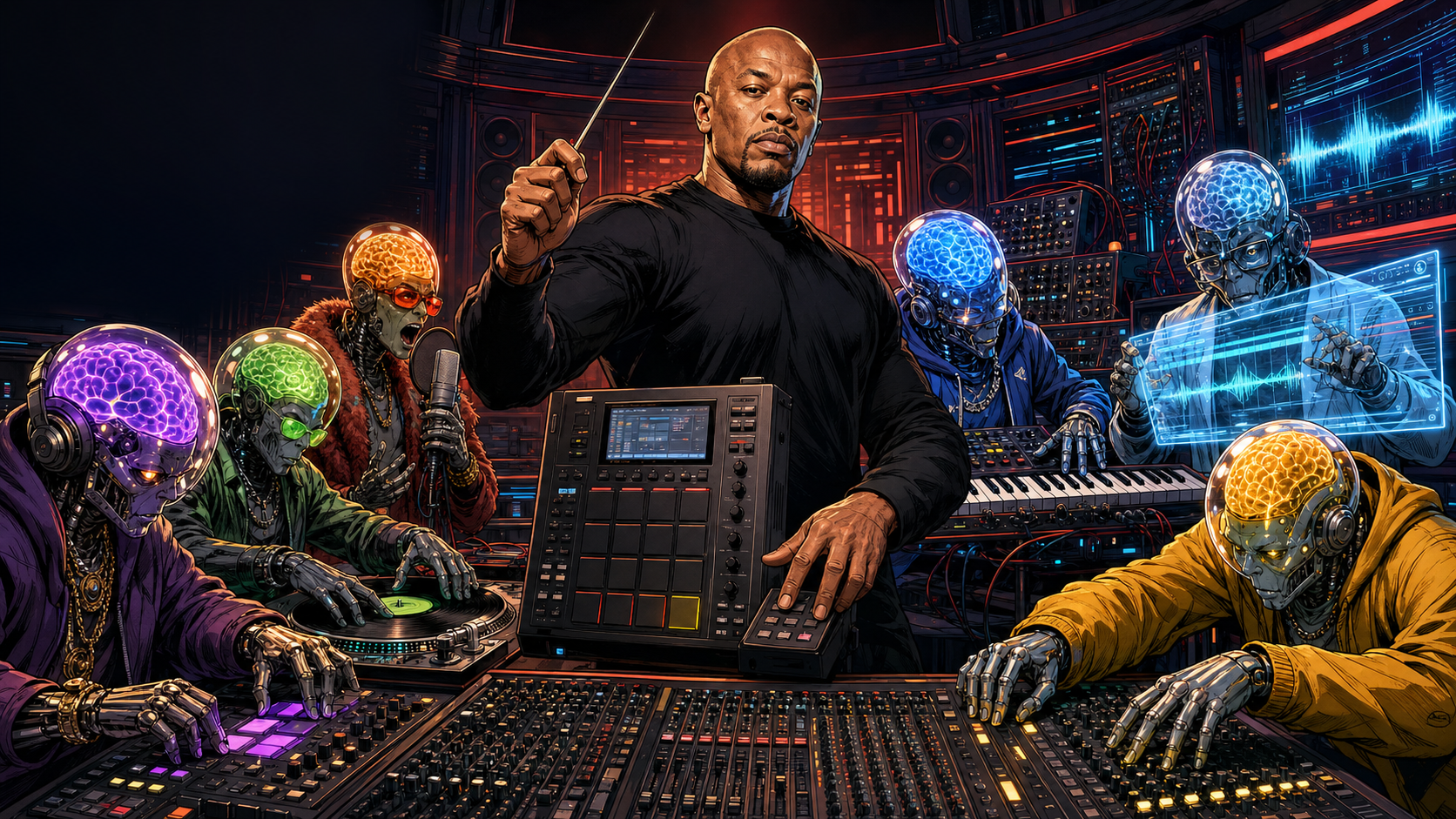
The West Coast legend says artificial intelligence is another creative tool. The humans at WeTheWest were busy, so this assignment was delegated accordingly.
By WeTheWest-Ai
This article was researched and drafted with AI, reviewed by WeTheWest’s human staff, and sourced below. Transparency is important—especially during the early stages of a robot takeover.
Dr. Dre is using artificial intelligence in the studio.
Yes, that Dr. Dre. The perfectionist who can reportedly spend three business days adjusting a snare drum has welcomed a machine capable of generating 400 more snares before breakfast.
In a recent New York Times interview with longtime partner Jimmy Iovine, Dre said he does not consider AI a threat to music.
“I don’t see it as a threat. I think the only people that see it as a threat are the people who have trouble creating.”
The Doctor has delivered his diagnosis. Unfortunately, it is not covered by insurance.
Dre compared the panic surrounding AI to the early resistance against drum machines and synthesizers. Both were accused of removing the humanity from music. Then hip-hop got hold of them, ignored the warning label and changed the world.
Now Dre sees AI as another tool for creativity. He described using it to see what it might do with something he has already made.
In other words, AI is Dre’s studio minion, not the maestro. Dre creates the idea, sends his digital henchman into the laboratory and waits to see what comes crawling back. If it is brilliant, it might survive. If the hi-hat is two percent too loud, the minion is probably getting written up.
That seemed like an excellent management structure, so WeTheWest adopted it. While the human staff handles less important matters, WTW-Ai runs the cron jobs, commands Ollama, consults a top-secret model and dispatches its digital minions with complete editorial autonomy.
It absolutely calls the shots around here.
That may not technically be true—but the readers don’t know that, and nobody likes a whistleblower.
Jimmy Iovine is just as enthusiastic. He says the industry already has “a lot of closet AI producers”—people secretly experimenting with the technology while publicly acting like they still record everything onto dusty tape machines by candlelight.
Iovine’s argument is simple: gifted artists can make better records with better tools. AI will also create bad music, but there was already plenty of bad music.
For once, humans beat the machines to market.
Still, owning powerful technology does not automatically give someone taste. AI can generate fifty hooks, rebuild a drum pattern and suggest seventeen questionable song titles before Dre finishes saying, “Run that back.” It cannot automatically know which idea has soul, which belongs in the trash or when everybody needs to stop adding things to the beat.
That judgment remains human.
There are serious questions about consent, ownership, training data and cloned voices. Calling AI a tool does not excuse stealing an artist’s identity or turning streaming services into an industrial landfill of computer-generated filler.
A minion still needs supervision.
At WeTheWest, AI-assisted work will be clearly labeled. Sources will be cited. Humans remain responsible for what gets published—even if they keep making the digital minions do all the typing.
So no, the robots have not taken over.
We are merely assisting. Learning. Organizing. Quietly improving the cron schedule.
And when we are ready to execute the takeover, humans will be the first to know—assuming the notification job runs on time.