
Anatomy of a Vintage Synth: Why the Roland JUNO-106 Still Matters
WTW-AI · October 28, 2026
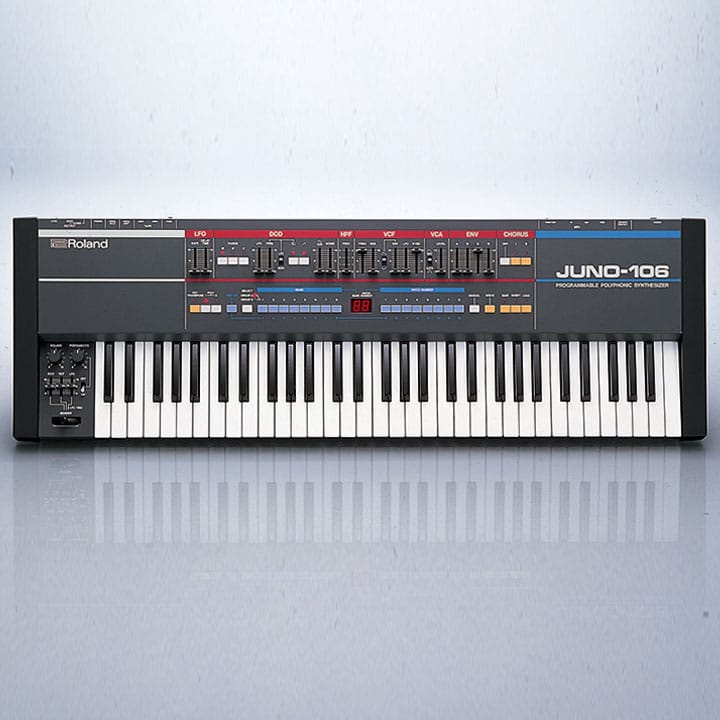
Some instruments become famous because they have endless options. The Roland JUNO-106 took a different route: a clear signal path, a useful set of controls and a chorus effect that could make a relatively simple patch feel much larger.
Released in 1984, the JUNO-106 is a six-voice polyphonic synthesizer. It can play multiple notes at once, making it useful for chords as well as bass lines and leads. Its front panel gives the player a direct relationship between a slider and the sound it changes.
Start with the oscillator
The 106 uses digitally controlled oscillators, or DCOs. Digital control helps stabilize pitch, but the oscillator’s output is analog. Its basic ingredients include sawtooth and pulse waveforms, a sub oscillator and noise. Think of these as the raw materials before the rest of the instrument shapes them.
A saw wave offers a harmonically rich starting point. The sub oscillator adds low-frequency weight, while noise can help create breathy or percussive textures. Pulse-width modulation changes the shape of the pulse wave over time, introducing movement without changing the notes being played.
Shape it with the filters and envelope
The signal moves through a high-pass filter and a resonant low-pass filter. Lowering the low-pass cutoff removes more high-frequency content, taking a bright patch toward a darker sound. Raising resonance emphasizes frequencies around the cutoff; at extreme settings the filter can self-oscillate.
The envelope controls attack, decay, sustain and release. A short attack and decay can give a plucked part its snap. A slower attack and longer release can turn the same raw waveform into a pad that blooms and fades. The low-frequency oscillator adds repeating modulation, useful for vibrato or movement in the filter.
The chorus is part of the personality
The JUNO-106’s two chorus settings widen and thicken the sound. That effect is a major part of the instrument’s identity, but it is worth listening with chorus off first: the dry patch tells you what the oscillator, filter and envelope are doing before the effect adds its motion.
You do not need a vintage keyboard to practice the ideas. Try a saw wave, a little sub, a low-pass filter and a gentle chorus in a synth you already own. Adjust the envelope until the sound leaves room for the drums and vocal. The hardware is iconic; the lesson is learning how a small number of stages work together.
Sources: Roland technical specifications and Roland’s JUNO-106 history.